
Adjusting to a Hearing Aid: The First 30 Days
The first days feel strange — that's normal and it passes. On this page we cover what to expect week by week, common difficulties, and what to do if you've tried a device before and given up.
Day one: everything will feel like too much
On the day you put the device in, you'll hear the fridge humming, footsteps, paper rustling. This isn't a fault — your brain is relearning sounds it hasn't heard in years. Because the loss progressed slowly, your brain had stopped filtering those sounds; now it needs to get used to them again.
Your own voice can sound strange too. This happens because the device seals the ear canal, and it's usually fixed with an adjustment or a change to the vent in the mould. Tell us, and we'll fix it — it's not something to put up with.
What to expect, week by week
- Week 1 — 3-4 hours a day, in quiet settings. At home, chatting with one person, watching TV.
- Week 2 — 6-8 hours a day. Wear it to the shop, to a neighbour's, on a short walk.
- Week 3 — All day. Try crowded settings: a restaurant, a family meal, public transport.
- Week 4 — Check-up appointment. Note where you struggled over these three weeks, and we'll update the settings accordingly.
This isn't a rule, it's a framework. Some people adjust in two weeks, others take two months. It's not a race.
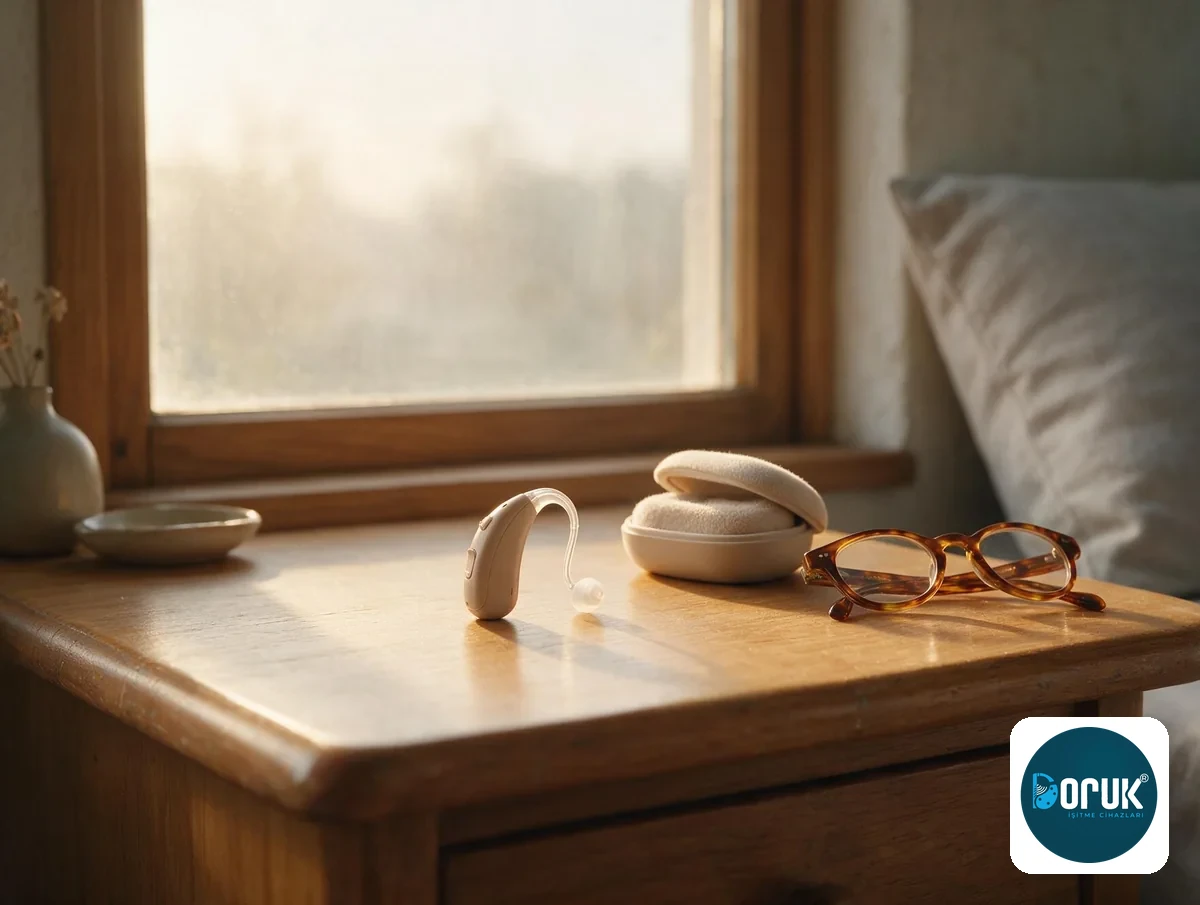
"I tried before, it didn't work"
We hear this a lot, and it's often a fair complaint. But the cause usually isn't the device itself.
A hearing aid isn't an off-the-shelf product; it needs to be set up for each ear based on the test. The same device can be uncomfortable with the wrong settings and comfortable with the right ones. Three situations we see often:
- It was never programmed. The device was given out on factory settings, never programmed to the person's audiogram.
- It was turned up to full power in one go. The brain needs to adjust gradually; given full power from the start, the person ended up leaving the device in a drawer.
- The mould didn't fit. A mould that doesn't sit fully in the canal is both uncomfortable and causes whistling. Because we make our moulds in our own lab, we can fix this quickly.
If you have an old device, bring it in and we'll take a look together. If it's something an adjustment can fix, you may not need a new device.
"Dad won't wear it" — for family members
The person who buys the device and the person who'll use it often aren't the same decision-maker. Not wearing it usually isn't stubbornness — it's one of three things:
- It's uncomfortable but they're not saying so — it's a settings or mould issue, and it can be fixed.
- Putting it in and taking it out is hard — behind-the-ear and rechargeable models are noticeably easier for reduced dexterity.
- They didn't make the decision themselves — this is the most common one. When someone isn't part of the process, the device feels "forced on me".
Our suggestion: come to the test together, but let us explain the result to them. Seeing their own audiogram makes it easier for them to own the decision. Forcing doesn't work; understanding does.
Things that make adjusting easier
- Wear it every day. Taking breaks lengthens the adjustment period; the brain starts over.
- Read out loud. Listening to your own voice for 10 minutes a day speeds up adjustment.
- Save the hardest setting for last. Crowds are the hardest; don't try them in the first week.
- Keep notes. Concrete notes like "struggled at the restaurant" or "crackling on the phone" help us get the settings right. Solutions to common situations are also in our help centre .
- Come to your check-up. We handle after-sales adjustment, check-ups and maintenance; if a fee applies, we tell you before the work starts.
When should you call instead of waiting?
The adjustment period makes some things normal, not everything. We don't say wait it out for these:
- Pain, redness or a sore in the ear
- Constant whistling (feedback)
- Dizziness
- Hearing getting worse while wearing the device
These point to a settings or mould issue; call your branch. If there's pain or discharge, see an ENT specialist first.
Frequently asked questions
It's different for everyone. Most users become noticeably more comfortable within the first few weeks, but how long the loss has been there, daily use and the device settings all affect this. Check-ups after the first fitting help us correct any unnecessarily loud or uncomfortable sounds.
Regular use makes adjusting easier. But you don't need to push yourself from day one; you can increase wearing time gradually following the plan we give you. If there's pain, dizziness, unbearable sound or clear discomfort, take the device out and let us know. We don't want you to put up with a problem an adjustment could fix.
We see this often in the first days. The ear canal being sealed can make your own voice sound more muffled or echoey. While adjustment plays a part, it can also be something we can fix with the mould, a vent or the device settings. Be sure to mention it at your check-up.
A past experience doesn't mean you won't benefit from a new device. The issue could be the device choice, the settings, the mould fit, lack of maintenance, a changed hearing level, or expectations. Bring your old device and any old test results. Sometimes proper maintenance and reprogramming is enough; sometimes a different solution is needed.
We handle the after-sales adjustment, check-ups and maintenance of any device you bought from us. Some of these services are free; if a charge applies, we tell you the amount before the work starts. For parts and repairs, we check what's covered under warranty.
First try to understand why they don't want to wear it. The device may be uncomfortable, sounds may be too much, it may be hard to use, or they may not want to accept the hearing loss. Rather than pushing, it helps more to come to a check-up together. We check the ear, the device and the settings, and put together a small, workable plan for wearing it.
This information is for general guidance only and doesn't replace diagnosis or treatment. If you have a complaint, see an ENT specialist.
Come in for a free hearing test
The test and consultation are free at all our branches, with no obligation to buy. No appointment needed either.