
3D Ear Mould
If a mould doesn't fit exactly, it starts whistling, sound leaks out, and the device can't deliver the performance it should. We make your mould ourselves: the scan is taken at the branch with a digital scanner, and it's made in our own lab in Ankara.
The scan is taken, sent to a distributor, made there, and shipped back.
1–2 weeksYour scan goes straight to our own lab. No shipping, no middleman, no waiting.
2 days at most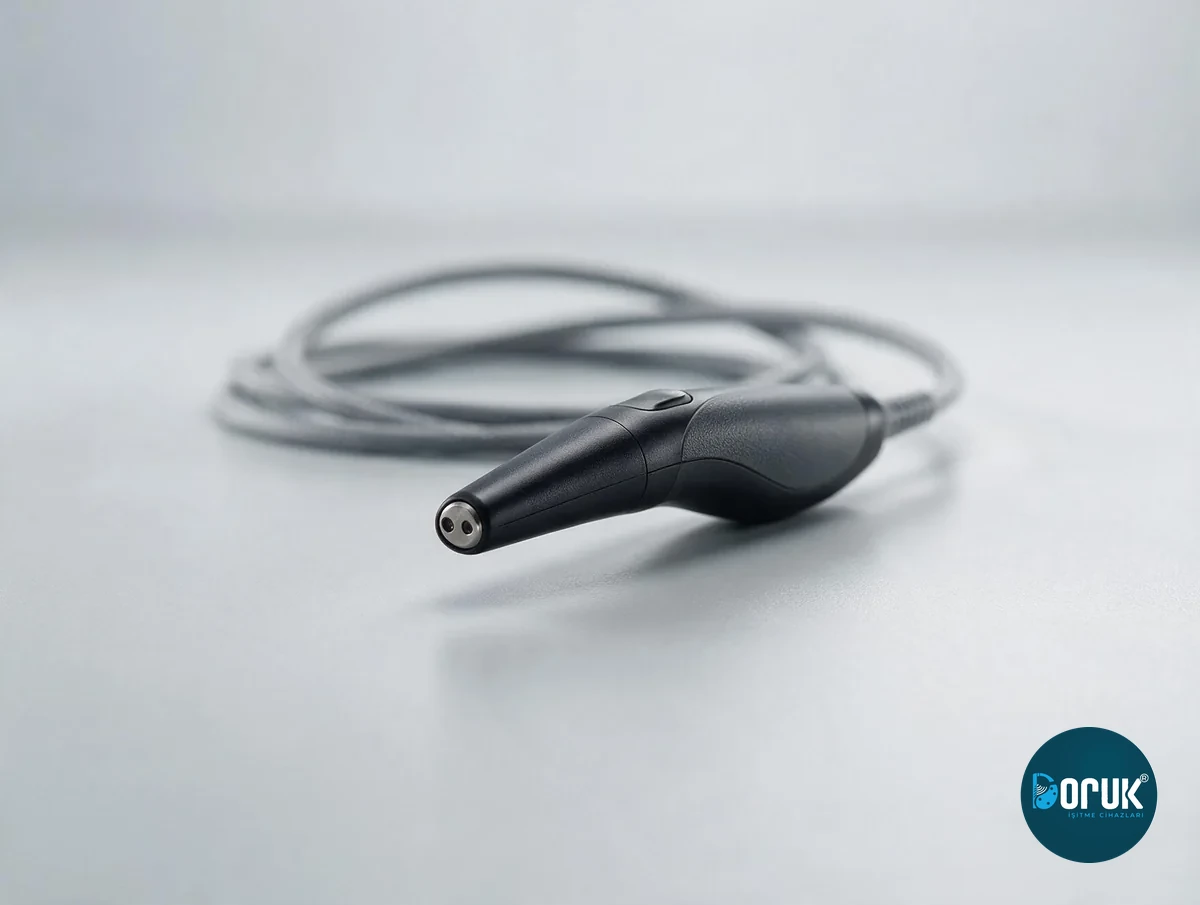
This speed matters especially for children: as the ear grows the mould gets too small and starts whistling. Because we have our own lab, we renew moulds without delay — details on our hearing loss in children page.
How does the process work?
- 01
Scanning
After a free test and ear examination, the scan is taken with a digital scanner at the branch you visit.
- 02
Design
The sound channel, vent and thicknesses are designed on a computer to match your hearing loss.
- 03
Production
Printed in our own lab with biocompatible medical resin, then finished and polished.
- 04
Fitting
The mould is fitted to your ear; if there's discomfort or whistling, it's adjusted the same day.
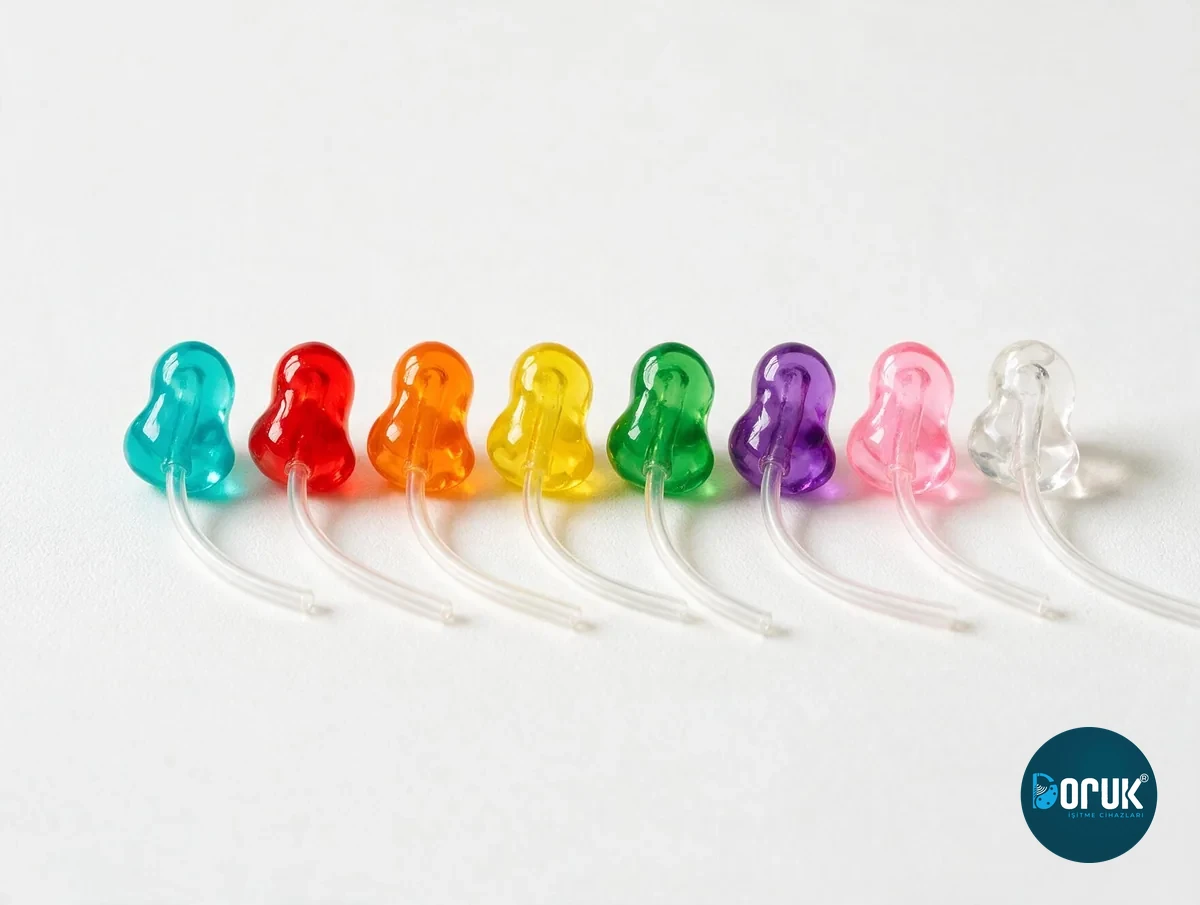
We make all six types
- Soft mould
- For children and severe loss; better seal.
- Hard (acrylic) mould
- Common for adults; durable, easy to clean.
- Vented mould
- Reduces the feeling of blockage, doesn't make your own voice sound muffled.
- Swimmer's plug
- Protection against water.
- Noise protector
- Against workplace noise.
- Cochlear implant / bone conduction
- Custom-made, compatible with the relevant systems.


Moulds can be made from clear to dark tones, and in bright colours for children; choosing a colour makes it easier for children to accept the device. See colour options.
What does a badly fitting mould do?
No matter how good the device is, the mould is what carries sound to your ear. With a mould that doesn't fit, this happens:
Whistling
Amplified sound leaks out around the edge of the mould, goes back into the microphone, and the device starts to squeal. This is the most common complaint and it's almost always caused by the mould.
Pressure and pain
A mould that's too tight puts pressure on the canal within a few hours. Pain is the most common reason people avoid wearing their device; it's solved with the mould, not the settings.
Sound leakage
Leaking sound doesn't just whistle — it also weakens power exactly where the loss is greatest, in the high frequencies. Speech is heard but doesn't become clear.
The device falling out
A loose mould shifts when you chew, cough or take off a mask. This is the most common reason devices get lost.
Your own voice sounding muffled
With a mould that fully seals the canal, your own voice sounds like it's coming from inside your head — this is called the occlusion effect. A vent placed in the right spot reduces this noticeably — because we make the mould in our own lab, we can adjust the vent's size and position to your hearing loss.
Soft or hard?
Both materials work well for the right person. The choice is made based on the degree of loss, age and your skin.
| Comparison point | Soft (silicone) | Hard (acrylic) |
|---|---|---|
| Seal | Better; prevents whistling in powerful devices | Good, but may not be enough at very high power |
| Who it suits | Children, severe and profound loss | Common for adults, mild and moderate loss |
| Putting in and taking out | Flexes, takes a bit of getting used to | Easy; an advantage for those with hand tremors |
| Cleaning | Surface is porous, needs wiping more often | Smooth, easy to clean |
| Lifespan | Can yellow and harden over time | Longer-lasting |
| For sensitive skin | Soft contact, doesn't press | Edges can leave a mark if they rub |
You don't have to decide alone: we discuss your test result and daily use together and explain our recommendation with the reasoning behind it.
When should you renew your mould?
A mould has no fixed lifespan; the ear changes and the material wears. If any of the following applies, it's time for a check:
- Whistling has started
Whistling that wasn't there before is the first sign the mould has loosened.
- The mould has hardened or yellowed
Silicone loses its flexibility over time, and the seal goes with it.
- It's started to hurt your ear
If there's redness, a mark or pain, don't force the mould.
- If there's a crack, break or tear
Even a small crack leaks sound.
- If your child has grown
May be needed every few months in infancy, less often for older children.
Because your digital scan stays in our archive for five years, in most cases we can make a new mould without taking a fresh scan. If the shape of your ear has changed noticeably, we take a new one.
What do the first few days feel like?
A new mould can leave a feeling of fullness in the ear at first; like glasses or new shoes, you get used to it in a few days. That's expected. For the process of getting used to the device itself, see our adjusting to a hearing aid guide.
Pain is not expected. Pressure, stinging, redness or discomfort lasting more than a few hours isn't normal; don't force the mould, bring it in. We adjust it the same day — since we make it ourselves, you don't have to wait for polishing or thinning.
How to clean your mould, on our device care page, step by step.
About 3D ear moulds
Usually not. We check your ear canal before we start. No silicone impression material is put in the ear during scanning; a slim scanning probe is moved in a controlled way. If you feel pressure, pain or noticeable sensitivity, we stop right away.
It can be done for most people, but we first need to make sure the ear is suitable. If there's heavy earwax, discharge, an active infection or recent ear surgery, we may delay the scan and ask for an ENT assessment. For young children who struggle to stay still, a classic silicone impression may be more suitable. We choose the method based on the ear's shape and the person's comfort.
No. A silicone impression taken with the right technique is just as reliable and lets us make a mould that fits. The difference with 3D scanning is that the process can be more comfortable and the scan can be stored digitally. Which method is better depends on your ear and how you'll use the device.
Our hearing test and initial assessment are free. The cost of the ear mould itself varies by type, material and purpose. We explain the options and the cost clearly before taking the scan.
There's no fixed schedule for this. Especially in babies and young children, the ear grows fast, so the mould may need changing more often. If it's loosening, whistling has started, the device doesn't sit well, or it's irritating the skin, it may be time for a check. We look at how well the mould fits together at your regular check-ups.
If your digital scan is in our archive and your ear shape hasn't changed, we can often make it without a new scan. For children who've grown, after ear surgery, a noticeable weight change, or if the old mould no longer fits well, it's better to take a new scan.
Because we make moulds in our own lab, under normal conditions we have them ready within two days at most. We tell you the delivery day when we take the scan.
We take the 3D scan at the branch you visit; the scanner is at all our branches. Production happens in our own lab in Ankara, and under normal conditions the mould is ready within two days at most.
The information on this page is for general guidance only and doesn't replace diagnosis or treatment. If you have an ear complaint, see an ENT specialist.
Taking the scan takes two minutes
After your free hearing test, your scan is taken with the digital scanner in the same visit. Your mould is made in our own lab in Ankara and is ready within two days at most.