Monday – Saturday 08:30 – 18:00 · Closed SundayAll our branches work with SGK (Turkish social security)Free Hearing TestIn Ankara & Istanbul 14 BranchesReSound · Widex · Rexton · Signia Authorised DealerHome-Visit OptionNew: digital 3D ear scanning at every branch · your ear mould ready in 2 days or less
0312 212 00 63 TürkçeDeutschArabic TurkeyDenmarkGermany

Types of Hearing Aids

From behind-the-ear to invisible models — the types of hearing aids and who each suits. Learn the differences before you decide.

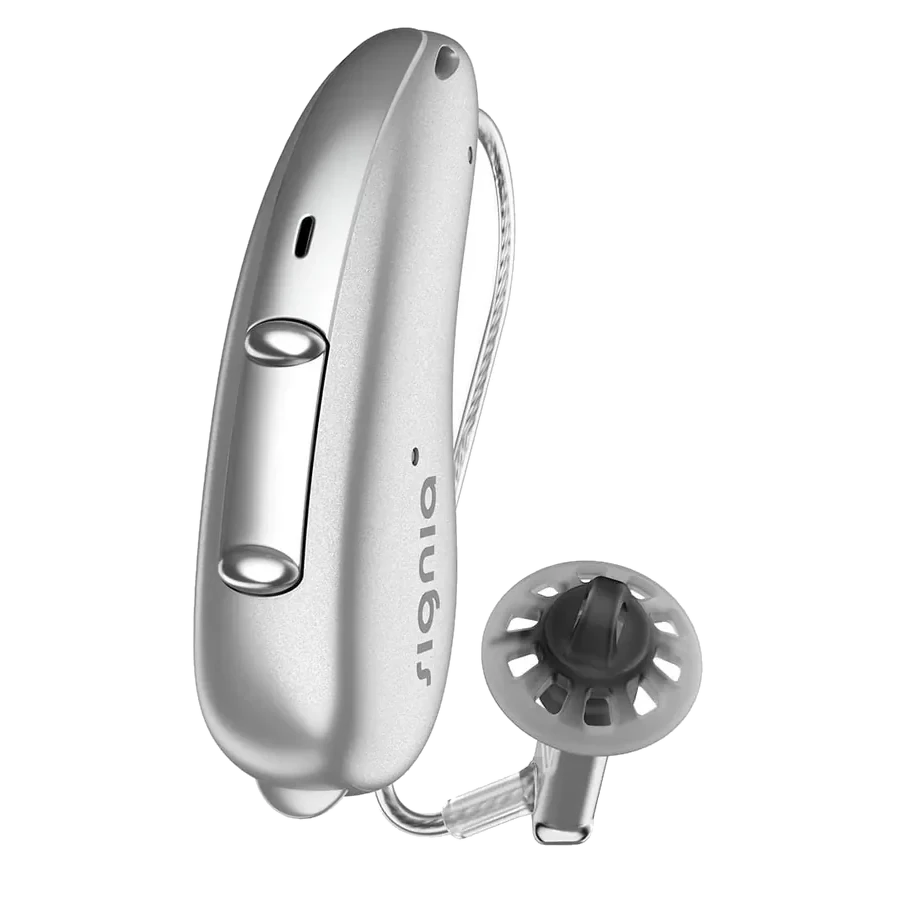
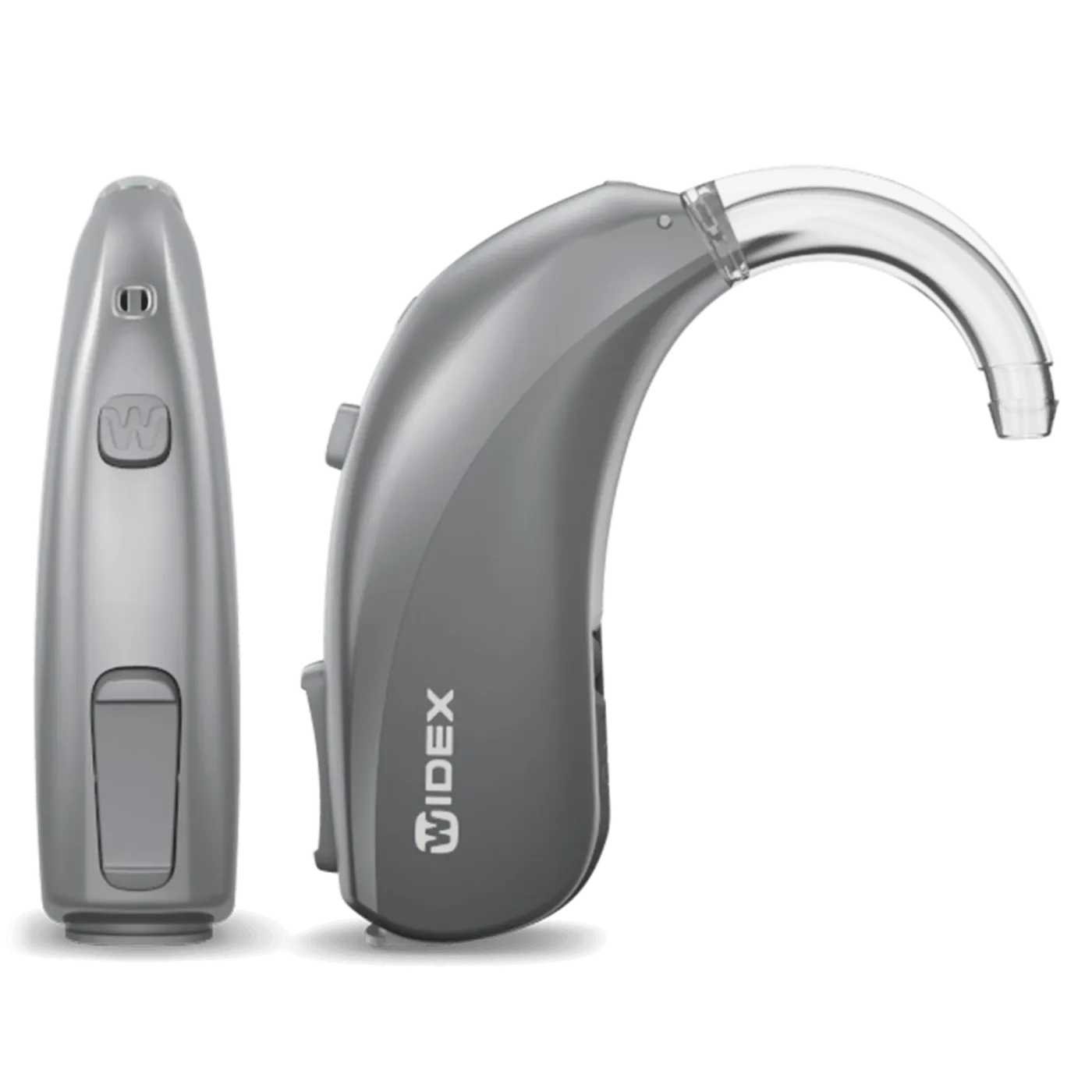
A behind-the-ear (BTE) hearing aid

Behind-the-ear

BTE

The body sits behind the ear; sound is carried through a tube and mould.

Powerful enough for every degree of loss. The first choice for children and those who have trouble with dexterity.

Pros
Powerful enough for every degree of loss, long battery life, and easiest to hold and clean. As a child's ear grows, only the mould needs renewing.
Worth knowing
More visible than the other types.
Receiver-in-canal (RIC) hearing aid with a thin tube

Receiver-in-canal

RIC / RITE

The body sits behind the ear, the speaker sits in the canal, connected by a thin wire.

For mild to severe loss. For those who want natural sound and a slim look.

Pros
Natural sound and a sleek look. The most popular type for mild and moderate loss; most brands' flagship models are this type.
Worth knowing
The receiver inside the canal needs regular care against moisture. Not suited to profound loss or heavy sweating.
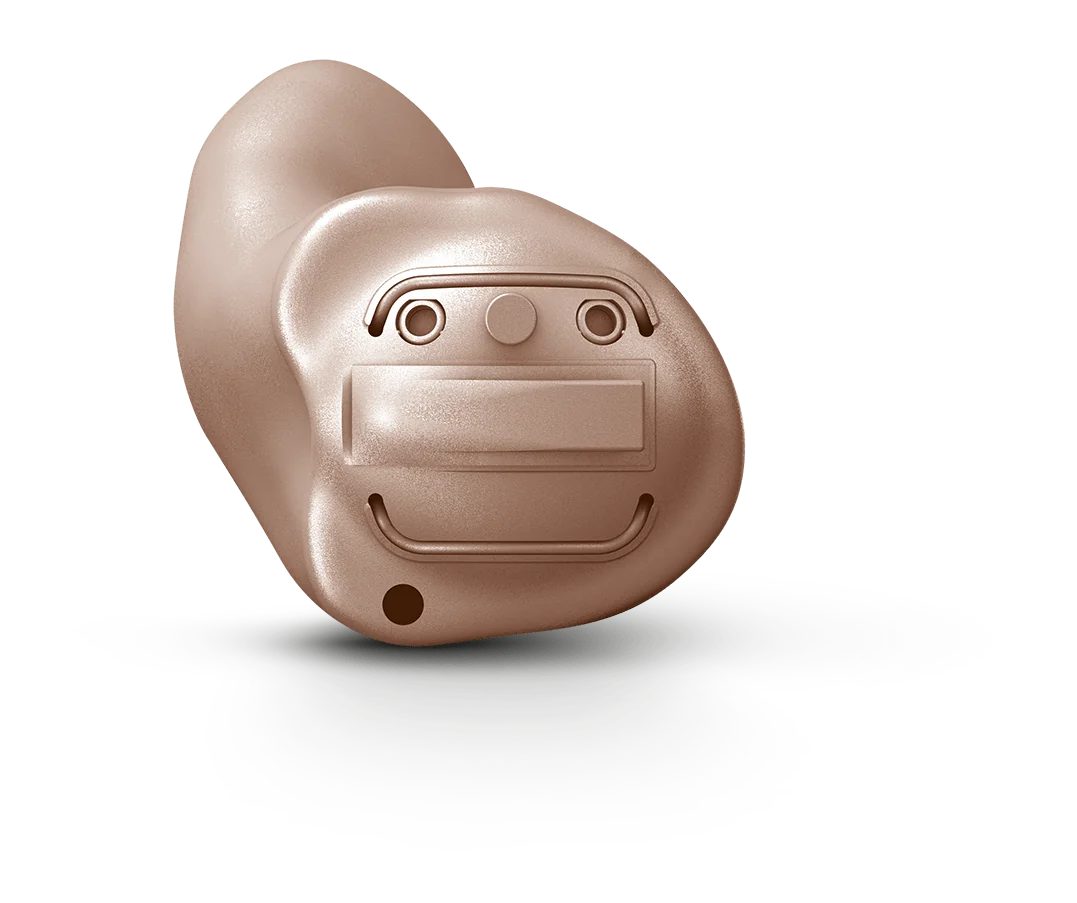
In-the-ear (ITE) hearing aid, skin-tone

In-the-ear

ITE / ITC

The whole device sits in the bowl of the ear or the canal; custom-made to your mould.

For glasses or mask wearers. Leaves the area behind the ear free, easy to hold.

Pros
Doesn't take up the area behind the ear, easy to hold.
Worth knowing
Power can be limited for profound loss; may not suit a narrow ear canal.
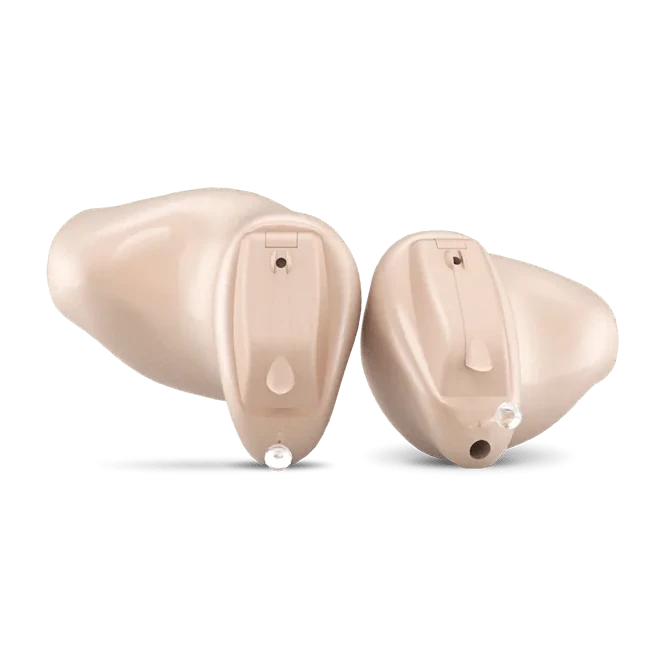
Invisible-in-canal (CIC) hearing aids

Invisible

CIC / IIC

The smallest types, sitting deep in the canal; often called invisible hearing aids.

For mild and moderate loss. If it matters to you that the device doesn't show.

Pros
Nearly unnoticeable from the outside. There are also ready-fit models that don't need to wait for a mould.
Worth knowing
Battery life is short, the small size takes dexterity, and it may not suit severe loss.

You can see models of every type on our devices page. If you're unsure, seeing the types side by side at a branch takes five minutes. We've also covered what else to look at besides type in eight points on another page. How the production difference by type affects the cost is something we've written about on our hearing aid prices page.

Rechargeable or battery-powered?

Think about your daily routine when deciding: will you put it in the same place to charge every night, or would you rather have the freedom of a spare battery? For sizes, lifespan and how often to replace, see our hearing aid batteries guide.

Two behind-the-ear hearing aids in a charging unit on the left, a single device and a battery card on the right
ComparisonRechargeableBattery
Daily useCharge overnight, use all dayReplaced when it runs out
DexterityNo small batteries to changeYou need to handle small batteries
TravelNeeds a way to chargeWorks anywhere with a spare battery
SGK battery supportDoesn't applyProvided with an appropriate report and prescription

Details of SGK battery support SGK support page.

Which type is available in which brand?

All main types are available across our four brands. Example models: ReSoundhas RIE and super-power BTE (Enzo), Widexhas the RIC family (Allure, SmartRIC), Signiahas slim RIC (Styletto) and rechargeable ready-fit in-canal (Silk), Rextonhas water-resistant bodies. If you're unsure, seeing the types side by side at a branch takes five minutes.

Frequently asked questions

We can't tell you that from appearance alone. The type and degree of your hearing loss, your speech discrimination, your ear canal, your dexterity, phone use and daily environments all affect the choice. After your test we show you the suitable options and explain clearly why we recommend each one.

If both ears have hearing loss that a device can help, we usually recommend two devices. This can help you locate sound direction, hear in a more balanced way, and especially understand speech in noise. But if the losses are very different, or one ear can't benefit from a device, the plan changes. For single-sided loss a standard device, CROS, BiCROS, a bone-conduction system, or another option can be considered. We decide based on the audiological and medical findings.

Both can work well when set up correctly. With a rechargeable model, you don't deal with small batteries; you need to charge it regularly every night. With a battery-powered model, you can carry a spare battery and keep going without needing a socket. Your dexterity, daily hours of use and travel habits matter in the choice. We separately check SGK battery support for battery-powered devices, based on your prescription and current regulations.

"Fully invisible" wouldn't be quite right, but some in-canal models are very hard to notice from the outside. Suitability depends on the width of your ear canal, the degree of your hearing loss, your ear health, and your dexterity for inserting and removing it. We don't recommend a model that fails to meet your hearing needs just because it's small.

We mostly prefer behind-the-ear devices for children. Being able to renew just the ear mould as they grow, letting the family easily check the device is working, and connecting with school systems are important advantages. Battery-door safety and whether the child can keep the device on their ear are also considered when choosing.

No. We first measure your hearing, show you suitable devices, and discuss the trial terms together. You can listen with the device in your ear and try suitable models in real-life conditions. The trial length and method can vary by product, so we clarify the details before starting.

Let's measure and find the type that suits you

It's not personal preference that decides the type — it's your hearing curve and ear shape. The test and consultation are free at all our branches; no appointment needed.