
Single-Sided Hearing Loss & CROS
When one ear hears normally and the other doesn't, the problem isn't just "hearing half as much": it becomes harder to tell where a sound is coming from and to make out speech in a crowd. What a CROS system does and doesn't do in this situation — explained below.
If it started suddenly, don't wait: it's an emergency
If you've lost your hearing suddenly, or over a few days, this is an emergency. Sudden hearing loss is a medical emergency: see an ENT specialist or emergency care the same day. Getting assessed and treated without delay matters for the chance of your hearing coming back.
Don't lose time trying a device; see an ENT specialist first. When a patient comes to us with this picture, we refer them to a doctor first too.
What is single-sided hearing loss?
Single-sided hearing loss is when one ear hears close to normal while the other has a permanent loss. The loss can be mild, or severe enough that no sound at all gets through that ear. The severe form is medically called "single-sided deafness".
Hearing with two ears isn't just about hearing sound louder. The brain uses the tiny differences in timing and loudness between what reaches each ear to work out where a sound is coming from and to pick speech out of noise. This is what's really lost when one ear is out of the picture.
Signs: do any of these sound familiar?
- Not being able to tell where a sound came from — turning the wrong way when your name is called
- Struggling to make out speech in a crowd, a restaurant or a car
- Always holding the phone to the same ear, always sitting on the same side without realising it
- Unusual tiredness by the end of the day — the brain works constantly to fill in the missing information
- Hearing that someone is speaking but not catching what they say
- Not being able to tell the direction of a horn or an approaching car in traffic
These signs aren't unique to single-sided loss. Testing is the only way to be sure; at our branches, the hearing test is free.

Causes
The cause of single-sided loss isn't always found, but common ones include:
- Sudden hearing loss — appears over hours or days, needs urgent assessment
- Acoustic neuroma — a benign growth on the hearing nerve; doctors investigate this possibility with single-sided loss
- Mumps, meningitis and some viruses — especially in childhood
- Head trauma or a blow near the ear
- Congenital loss
- Ménière's disease and other inner-ear conditions
Finding the cause is a doctor's job. Ours is to measure your hearing once the doctor's assessment is complete, and choose the right solution together.
How does CROS work?
If the hearing nerve in the non-hearing ear has stopped working, a hearing aid on that ear won't help even if it amplifies sound — there's no path left to carry it. A CROS system solves the problem differently: it picks up sound from the non-hearing ear and sends it wirelessly to the hearing ear.
The system has two parts. The part worn on the non-hearing ear is a transmitter— it only picks up sound. The part on the hearing ear receives that sound and delivers it to the ear. This way, speech coming from the "blind spot" becomes audible too.
If the hearing ear also has some loss, a BiCROS setup is used: this time the part on the hearing ear both delivers the sound from the other side and supports the loss in that ear itself.
To be clear: CROS doesn't treat hearing loss and doesn't restore the non-hearing ear. What it does is make daily life easier by delivering sound from the non-hearing side to the hearing ear. The ability to tell sound direction doesn't come back fully.
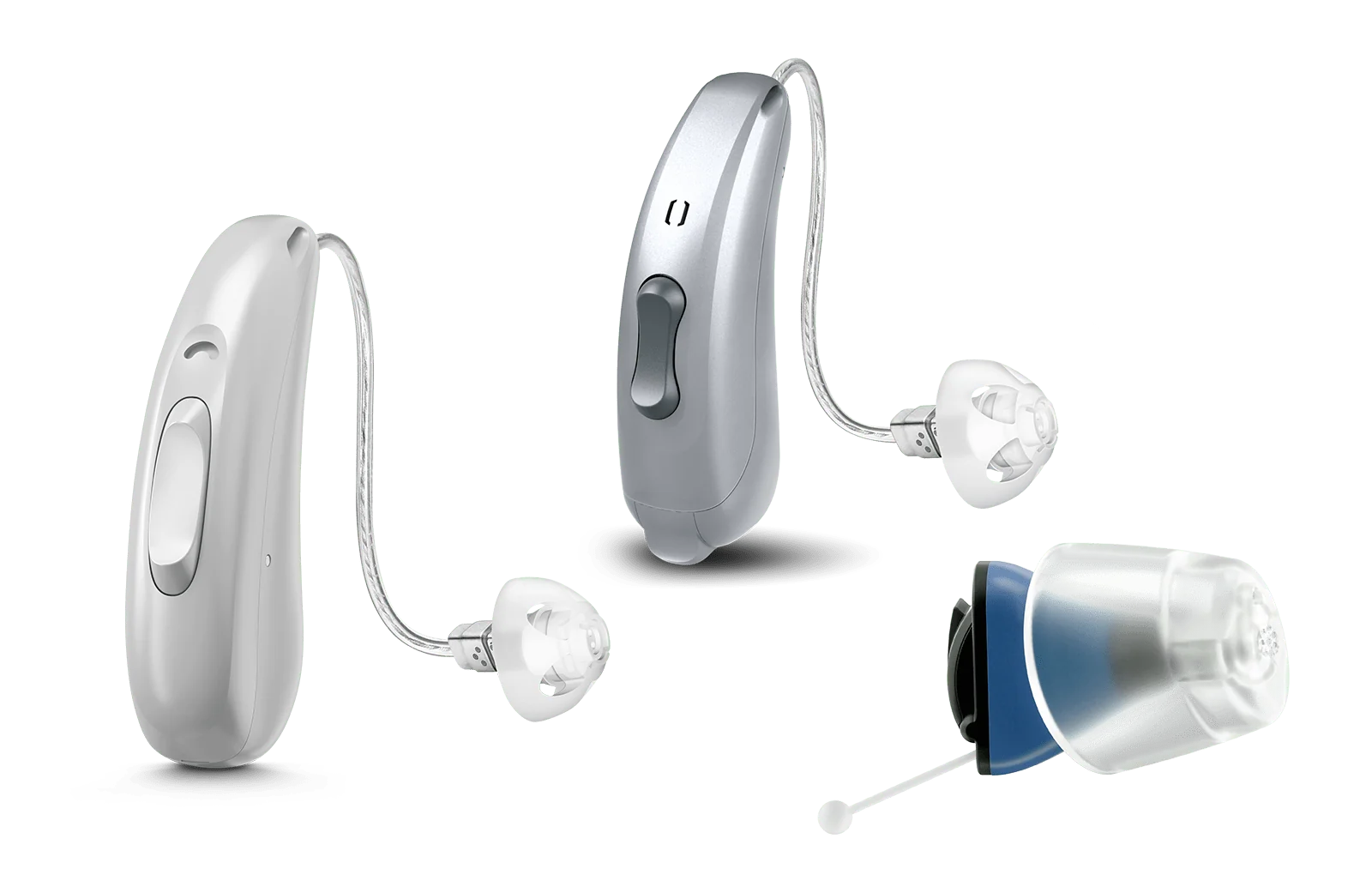
The CROS solution at our branches
Signia's CROS IX model is a current-generation system designed for single-sided loss, and it's available at our branches. For detailed information and colour options, see our Signia devices page .
Which setup (CROS or BiCROS) suits you is determined by the test results for both ears. That's why the first step is always the test.
Frequently asked questions
It depends on whether there's usable hearing left in that ear. If the ear can benefit from a standard hearing aid, a single-sided device can be considered. If it can't, a CROS system can send sound from that side to the better-hearing ear. For some people, a bone-conduction system or cochlear implant may also come into the medical assessment. An ENT exam and detailed hearing tests are needed first.
No. CROS doesn't restore the non-hearing ear and doesn't bring back natural two-eared hearing. By sending sound from the non-hearing side to the better ear, it makes it easier to notice people speaking from that side. It's important to try its benefit in real everyday conditions.
Don't wait, and rather than coming to a hearing centre, see an ENT specialist or emergency care the same day. Sudden hearing loss is a medical emergency. Early assessment and treatment without delay matter for the chance of your hearing coming back.
In a CROS or BiCROS system, how much SGK covers can vary by the audiological report, prescription, product code and current rules. So a general yes or no wouldn't be accurate. We check your documents and MEDULA eligibility before choosing a product.
A CROS system has a part on each ear, but they don't work as two independent hearing aids. The part on the non-hearing side picks up sound and sends it to the receiver on the better-hearing side. If the better ear also has some hearing loss, a BiCROS system, which amplifies sound at the same time, can be considered.
This information is for general guidance only and doesn't replace diagnosis or treatment. If you have a complaint, see an ENT specialist.
Related pages: Signs of hearing loss · Tinnitus · Our Services
Let's get your hearing measured for single-sided loss
Whether CROS and BiCROS systems suit you only becomes clear after the test. The test and consultation are free at all our branches.